How a Hardscape Company and Retaining Wall in Jamaica Plain, MA, Improves Usable Backyard Space
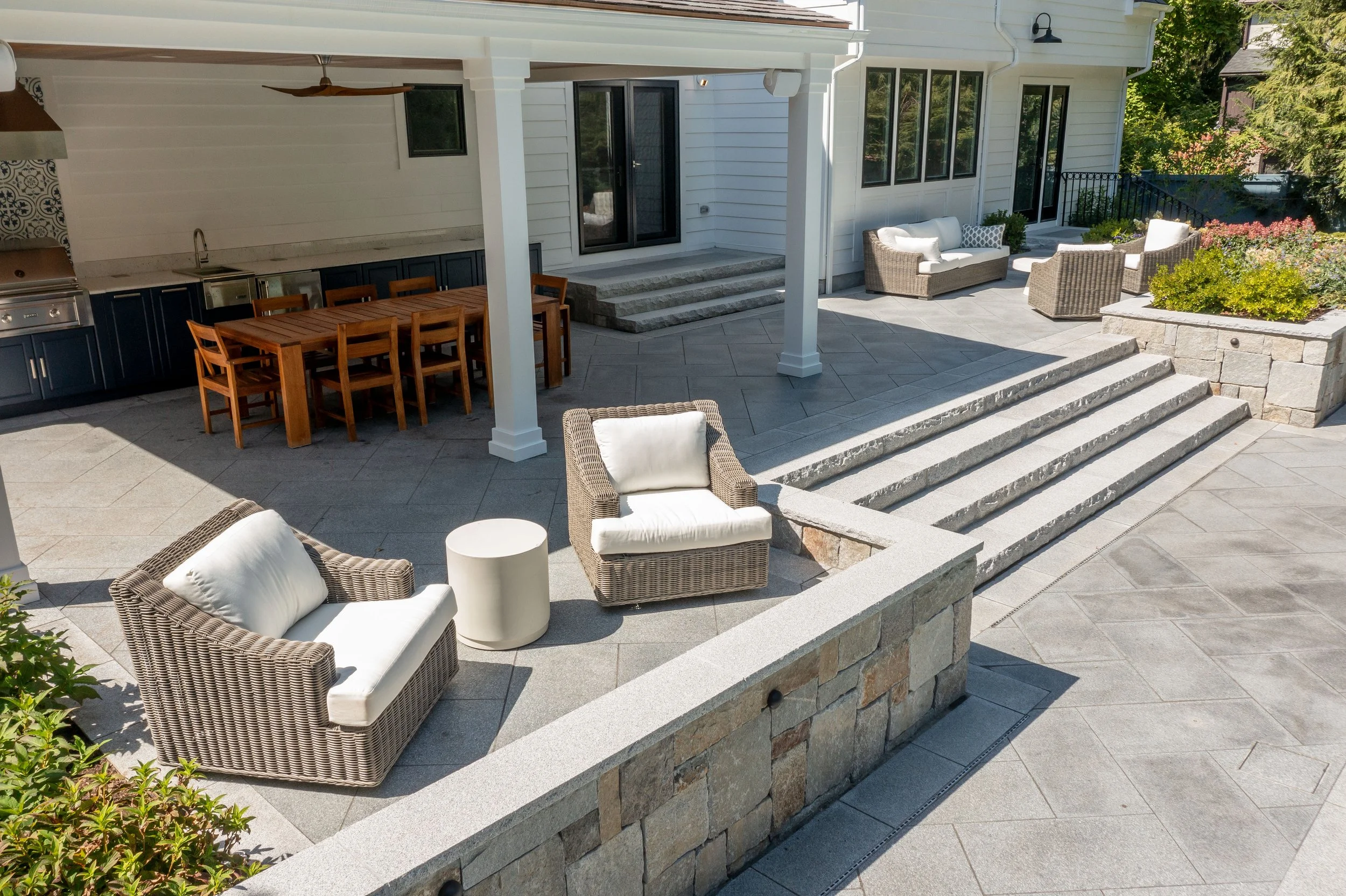
If you’re researching a hardscape company and retaining wall in Jamaica Plain, MA, you’re probably not looking for “a wall.” You’re looking for solutions so that your backyard finally works the way you live - with more level space, cleaner lines, better flow, and a layout that feels intentional instead of improvised.
In Jamaica Plain, that usually means dealing with real-world constraints—slopes, tight footprints, older properties, tree roots, and the kind of New England weather that can punish anything built without proper base prep and drainage.
Related: From Slope to Style: Retaining Wall Strategies for Landscape Design in Lexington, MA
Let Our Experts Transform Your Outdoor Living Space
A custom retaining wall is one of the most powerful backyard improvements you can make because it doesn’t just add structure—it edits the land. It reshapes the way you move, gather, and use your outdoor living space, turning an awkward grade change into something that feels designed.
And when our experts pair that wall with thoughtful landscape design and coordinated hardscape design—patios, steps, seating, lighting—the result is a backyard that feels larger, calmer, and dramatically more usable.
Premier Pavers & Hardscape Co. focuses on exactly this kind of transformation across the Boston-area communities it serves, with a design-and-build approach and industry-recognized credentials like ICPI certification and Massachusetts licensing that matter when walls, drainage, and freeze-thaw conditions are in play.
In Jamaica Plain, “bigger” isn’t always the goal—smarter is. Many backyards are limited by:
Grades that steal flat space
Drainage that turns sections into soggy no-go zones in spring and after storms
Narrow side access that makes layouts feel cramped
Mature trees and established plantings you’d rather work around than remove
A retaining wall helps you reclaim space by creating terraces—level zones that can be assigned a purpose. One terrace becomes the dining patio. Another becomes a lounge area with a fire feature. A quieter upper level becomes a garden escape that still feels connected. This is where hardscape design stops being “add-ons” and starts acting like architecture.
Materials Also Matter Locally
In and around Boston, it’s common to see hardscape materials like:
Natural stone looks that fit older homes in Jamaica Plain
If your home leans historic or traditional, natural stone can feel like the most “correct” choice because it looks like it belongs there. Granite and fieldstone aesthetics pair especially well with classic New England architecture, brick detailing, and mature landscapes.
Instead of reading like a new addition, the wall and surrounding features can feel grounded and established—like they’ve been part of the property’s character for decades.
Segmental concrete retaining wall systems for clean lines and consistent performance
When you want crisp geometry, smooth transitions, and a polished, modern edge, segmental concrete retaining wall systems deliver a very controlled look. These systems are engineered for consistent performance and are especially useful when your design calls for longer runs, taller walls, or gentle curves that still feel intentional.
The real luxury benefit here is confidence: the materials are designed to work together, and when our experts build them with proper base prep and drainage planning, the result looks sharp and stays that way through Boston’s freeze-thaw seasons.
Bluestone and regional favorites for patios and steps that feel timeless
Bluestone is a regional standout for patios and steps because it feels upscale without trying too hard. It has that refined, classic New England sensibility—substantial underfoot, visually calm, and versatile enough to work with both traditional and more contemporary homes.
It also pairs beautifully with retaining walls because it can carry the same “architectural” feeling through the entire outdoor living space, from upper terrace to lower patio, creating a cohesive hardscape design that looks intentional from every angle.
Premier highlights bluestone among its offerings, which is a strong signal they understand what resonates locally for high-end backyard improvements.
And then there’s weather…
Boston’s seasonal freeze and thaw cycles are relentless, and your wall needs to be built with that reality in mind—not with “good enough” shortcuts.
Frost depth conditions are tracked by the National Weather Service, and frost can reach deep enough to create heaving pressure in poorly prepared installations. That’s why base prep, compaction, and drainage detailing are not optional if you want your wall to look sharp and perform for the long haul.
When Would You Need To Have A Retaining Wall?
You’d consider a retaining wall when your yard is fighting you—when the land’s shape prevents the outdoor living space you want.
Common Jamaica Plain triggers include:
A slope that steals your best square footage
If your yard falls away right where you’d place a patio or entertaining zone, you’re losing usable area to grade. A custom retaining wall can “hold” a new level plane so your patio isn’t forced into the one narrow spot that happens to be flat.
Erosion, washouts, or “migrating” soil
If you see soil collecting at the bottom of the yard, mulch washing out after storms, or exposed roots on a slope, your landscape is telling you it needs structure. A properly designed wall stabilizes soil and creates cleaner planting edges.
A backyard that needs definition and privacy
Terracing doesn’t just make space—it creates separation. One level can feel social; another can feel tucked away. Add seat walls, steps, and lighting, and you get that “outdoor rooms” feeling without making the yard feel boxed in.
Drainage problems that keep you from using the yard
In Boston-area conditions, spring thaw and heavy rains can turn low spots into mud zones. Drainage planning is a core part of retaining wall design because water pressure behind a wall is one of the biggest threats to its longevity.
A renovation that needs safer, more comfortable circulation
Steep grades often lead to awkward stairs or worn footpaths. Retaining walls can integrate broad, comfortable steps that feel like they belong—especially when coordinated with a patio and walkways.
What Are Different Types Of Retaining Walls?
Not all retaining walls behave the same, and in a climate like Greater Boston, choosing the right system is as much about engineering and drainage as it is about style.
Segmental concrete block retaining walls
These are modular wall systems designed for consistent performance. They’re popular for clean lines and predictable construction—especially when you want tall terraces or long runs with gentle curves.
In the right hands, they can read very high-end, particularly when paired with upgraded caps, integrated lighting, and matching patio materials.
Natural stone retaining walls
If your property leans classic—older architecture, historic vibes, or a lush garden-forward aesthetic—natural stone can feel like it’s always been there.
The craftsmanship is the point: stone selection, fitting, and proportion make the difference between “pile of rocks” and an elegant, intentional structure.
Boulder and outcropping-style walls
For a more organic look, boulders can create a rugged, naturalistic edge—especially in a landscape design that includes layered plantings and softening greens.
This style can work beautifully when you want the wall to blend rather than define a crisp edge.
Gravity vs. reinforced designs
Some walls rely mainly on their mass (gravity). Others use geogrid reinforcement and engineered base systems to stabilize taller structures.
When height, soil conditions, and water are factors, engineered details become critical—not just for performance, but for compliance and inspection expectations.
Local code and permitting realities
Across Massachusetts towns, you’ll often see heightened requirements for taller retaining walls, including professional design and stamped drawings.
Massachusetts building code includes provisions tied to foundations and retaining walls, and local departments may apply additional requirements depending on wall height and location.
What Is The Life Expectancy Of A Retaining Wall?
A well-built retaining wall is not a “short-term upgrade.” Done right, it’s a long-performance structure that holds its line, drains properly, and stays visually clean through years of weather.
Life expectancy depends on:
Wall type and materials
Base depth and compaction quality
Reinforcement and engineering (when needed)
Drainage design (this is the big one)
Exposure to freeze-thaw and de-icing salts
Ongoing site water behavior (roof runoff, downspouts, grading)
In New England, freeze-thaw cycles can be brutal on anything built without proper base and water management. Frost depth conditions vary, but frost penetration is a real consideration—and it’s one reason experienced builders design for stable bases and controlled drainage rather than assuming the soil will “stay put.”
You’ll also want your wall planned with seasonal conditions in mind. Massachusetts has well-documented freeze and frost patterns, and ground frost can occur even when air temperatures read above freezing—important context when scheduling and sequencing construction work.
Bottom line: the wall’s “life” is mostly decided before the first block or stone is set—during design, excavation, base prep, and drainage detailing.
Related: How Retaining Walls and Outdoor Lighting Work Together in Weston, MA Backyards
Do You Always Need Drainage Behind A Retaining Wall?
Yes—practically always. If there’s one place you do not want to gamble, it’s water management behind a retaining wall.
Here’s why: water builds pressure. Pressure pushes. And pressure finds the weakest point.
A retaining wall isn’t just holding back soil; it’s managing the soil’s relationship with water. Massachusetts building code material on foundations and retaining walls underscores how structural performance and soil/water conditions are linked—because saturated soil behaves differently than dry soil.
In Jamaica Plain, drainage planning is especially important because spring thaw can release a lot of water into the soil quickly. Freeze-thaw cycles can also expand moisture in the ground and stress a wall over time. Additionally, older properties may have quirky grading or downspout routing that sends water to the exact wrong place
What “drainage behind the wall” typically includes (conceptually):
a free-draining aggregate zone behind the wall
a drain system at the base to move water away
weep outlets or controlled discharge points (when appropriate)
grading that keeps surface water from spilling behind the wall
This isn’t about overbuilding. It’s about building correctly—so your custom retaining wall remains straight, stable, and good-looking through seasons of rain, snowmelt, and temperature swings.

Which Hardscapes Can Be Added With A Retaining Wall?
This is where the fun really starts—because the wall is the backbone, and the surrounding features are what turn it into an outdoor living space.
1. Patios that finally fit your lifestyle
Once a wall creates level ground, a patio can be sized for the way you actually entertain. Dining sets, lounge furniture, grills, and circulation space all need breathing room.
A retaining wall can “square up” the yard so your patio isn’t squeezed into an odd corner.
2. Integrated steps that feel natural (not like an afterthought)
Grade changes demand movement. The best retaining wall designs incorporate steps with comfortable proportions, wide treads, and a natural flow from one terrace to the next.
This is one of the biggest upgrades in daily usability—especially when you’re carrying food, drinks, or just moving through the space barefoot in summer.
3. Seat walls and built-in gathering edges
Retaining walls can double as seating zones, creating casual places for guests to perch without dragging chairs across the yard. It’s also a clean way to define space without adding visual clutter.
4. Outdoor kitchens and entertaining zones
Premier Paver & Hardscape Co. specializes in projects that extend into expansive outdoor features, including outdoor kitchens, as part of its broader work.
A retaining wall helps these features feel anchored and intentional—especially on sloped lots where appliances and counters need stable, level placement.
5. Lighting that makes the space feel finished
Low-voltage lighting integrated into caps, steps, and patio edges changes everything at night. It’s not just practical—it’s atmosphere. Your outdoor living space becomes usable after sunset, and the terraced layout reads as a cohesive design, not disconnected parts.
6. Fire features and conversation areas
A wall can carve out a dedicated fire feature terrace that feels protected and defined—great for shoulder seasons when Boston nights cool off quickly.
7. Planting terraces and garden structure
Terraced beds are easier to maintain, easier to mulch cleanly, and more visually layered. A retaining wall creates “frames” for plantings, so your landscape design has depth and rhythm instead of one flat layer.
Planning Around Jamaica Plain Weather And Installation Timing
If you’re investing in a high-end retaining wall and connected backyard improvements, timing matters—not for marketing reasons, but because New England conditions are real.
What affects scheduling in the Boston area:
Frozen ground and frost depth conditions can limit excavation and base work at certain times.
Spring thaw can create saturated soils and soft subgrades, which need proper assessment and stabilization before base installation.
Heavy rain periods can require smart sequencing so excavation stays protected and drainage is installed early.
In general, many homeowners aim for late spring through fall for major outdoor construction because temperatures, soil conditions, and daylight are more cooperative. But the “right” window depends on your specific yard—shade, drainage patterns, access, and scope all matter. The biggest advantage of working with a dedicated team is that your project isn’t guessed into place; it’s planned around real site conditions and executed with the right sequencing.
What To Look For In A Retaining Wall Partner (Especially For Luxury Projects)
For an affluent homeowner, this isn’t just a construction decision—it’s a trust decision. You want a team that can guide design choices, protect the surrounding property, and deliver a finished space that looks deliberate from every angle.
Premier Pavers & Hardscape Co. emphasizes a consultation-led process and presents itself as a design-forward contractor serving communities around the Boston metro area, with credentials including a Massachusetts Construction Supervisors License, Home Improvement Contractor Registration, and ICPI certification.
When you’re selecting a hardscape company, pay attention to whether they:
talk clearly about drainage and base prep (not just surface aesthetics)
show projects that include walls plus patios/steps/lighting as a unified design
understand local permitting norms for taller or structural walls
can translate your lifestyle goals into a plan that actually fits the site
Because a retaining wall isn’t a standalone feature. It’s land-shaping. It’s structure. It’s the moment your backyard stops being “whatever the lot gave you” and becomes something designed around you.
Ready to schedule your outdoor transformation? Contact Premier Pavers & Hardscape Co. today to book a design consultation.
Related: Create a Tranquil Outdoor Reading Nook With Landscape Design and a Patio in Wayland and Medford, MA
ABOUT THE AUTHOR
Our mission at Premier Pavers & Hardscape Co. is to bring indoor comfort and ambiance to the outdoors by creating custom outdoor living spaces and landscapes where you can spend time with your friends and family. We proudly offer full landscape design, build, and renovation services in Eastern Massachusetts. With two decadesof creating custom, beautiful, and functional outdoor spaces and paver patios, installing irrigation systems, fencing, outdoor lighting, and building decks, our talented team is efficient and meticulous throughout the entire process. We listen and deliver on your expectations, whether it’s a dream outdoor kitchen, a multi-car driveway, a front entry facelift, or an automated snowmelt system.